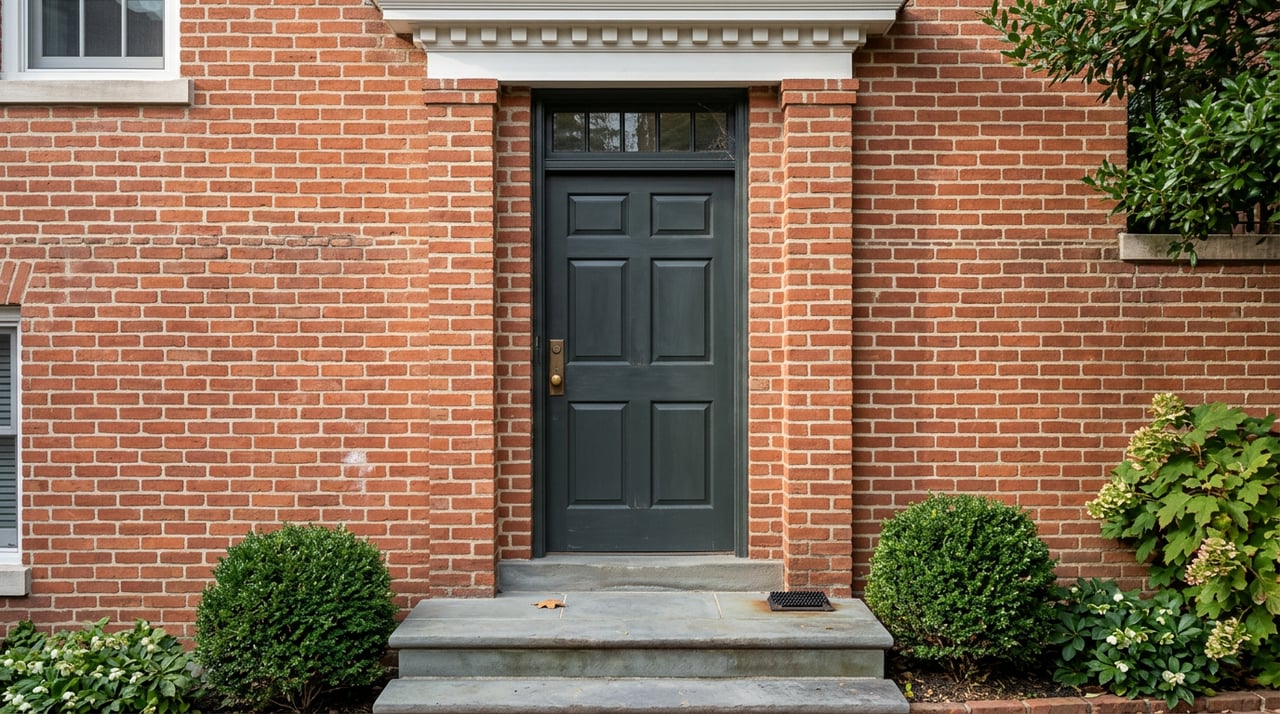
Most sellers walk into a listing appointment expecting to talk about paint colors, staging, and price per square foot. Owners of homes inside Charlottesville's historic districts get a different first question from serious buyers: what has the BAR already approved on this house, and what will they approve next?
That question is the thesis of this piece. In Charlottesville's eight Architectural Design Control districts, the Board of Architectural Review is effectively a silent third party in every sale. It shapes what a buyer can do with the home after closing, which shapes what they will pay for it today. Sellers who treat BAR history as marketing collateral, not paperwork, are the ones who preserve pricing power in a cooling 2026 market.
The room that isn't at the closing table
Charlottesville's BAR is a nine-member citizen board that reviews exterior alterations, additions, new construction, and demolitions inside designated districts and on Individually Protected Properties. The BAR reviews changes to the exterior of designated properties in architectural design control districts, including new building construction, alterations, building additions, and demolitions, though some minor changes such as paint color and signs may be reviewed administratively by city staff. The BAR generally meets on the third Tuesday of each month at 5 p.m. in the City Council Chambers of City Hall.
For a buyer, that calendar matters. A renovation that a buyer of a non-historic home would start in week two of ownership can, on a protected property, require a Certificate of Appropriateness that runs through a pre-application conference and a public hearing. That timeline gets priced into every offer, whether the buyer says so or not.
Sellers who understand this early stop treating BAR review as a compliance topic and start treating it as a value topic.
Which addresses this actually applies to
There is a common misconception that historic review only touches a handful of downtown blocks. The footprint is larger than that. According to the city's own ADC district introduction, Charlottesville currently has eight ADC districts:
- Downtown
- North Downtown
- Ridge Street
- West Main Street
- The Corner
- Wertland Street
- Oakhurst-Gildersleeve Neighborhood
- Rugby Road-University Circle-Venable Neighborhood
There are currently eight ADC districts in Charlottesville: Downtown, North Downtown, Ridge Street, West Main Street, The Corner, Wertland Street, Oakhurst-Gildersleeve Neighborhood, and Rugby Road-University Circle-Venable Neighborhood.
Beyond those, all Individually Protected Properties are subject to review by the Board of Architectural Review for any exterior changes including demolitions, ensuring a public notification and review process before changes can be made to a protected property. A house does not have to sit inside a district boundary to carry BAR obligations. IPPs can be anywhere in the city.
There is also a lighter-touch tier. The Historic Conservation District designation is intended to protect the character and scale of the more modest historic Charlottesville neighborhoods that are facing tear-downs and increased development, without imposing excessive requirements on the current residents who may want to remodel their homes. If your home is in one of the three HC districts rather than an ADC district, the disclosure conversation with a buyer is different, and worth getting right before the first showing.
The authority for all of this sits in Chapter 34 of the city code, enabled by Virginia Code 15.2-2306. A buyer's attorney will find it. Better if your listing does first.
Where the comp problem shows up in the appraisal
Once you leave standard subdivision inventory, comparable sales get thin. A Federal-style rowhouse on North Downtown does not price like a 1990s colonial on the same tax map. Appraisers pulling the nearest three closed sales may miss the premium the market has actually paid for original heart pine floors, hand-carved mantels, or a documented pre-1900 provenance. Lenders unfamiliar with the Charlottesville historic segment sometimes discount those features entirely.
That mismatch is the friction. In a market where, per the Houzeo March 2026 snapshot, Charlottesville homes were selling at 98.52% of asking with roughly 2.6 months of supply, an appraisal that comes in soft still kills a deal. Historic sellers cannot rely on volume of comps to bail them out.
Two practical implications:
- Pre-list appraisal or a broker price opinion built on a wider historic comp radius, including North Downtown, Rugby Road, Martha Jefferson, and University-area sales, protects you from a single narrow appraisal at contract stage.
- If your buyer is financing, ask early whether their lender has closed historic property loans in Charlottesville before. Portfolio lenders and jumbo lenders with Central Virginia experience read these files differently than a national retail lender.
The paper trail that changes a buyer's offer
Every historic home has a story. The homes that sell fastest have the story in a folder, not in a seller's memory.
Assemble before you list:
- Prior Certificates of Appropriateness. Any exterior work the current or prior owners completed with BAR sign-off. Windows, roofing, porch repairs, additions, fencing, paint approvals if applicable. Pull them from the city permit portal or request them through [email protected].
- Unpermitted work disclosure. If a prior owner replaced windows or altered a rear elevation without BAR review, that is a live issue the buyer will surface. Address it in the listing, not at the inspection.
- Systems documentation. Electrical panel upgrades, knob-and-tube remediation, HVAC installations with any exterior condenser placement previously reviewed. The buyer's inspector will ask, and a folder answer beats a shrug.
- Register status. Whether the property is on the Virginia Landmarks Register or National Register of Historic Places. State or National designation is an honorary recognition that, unlike local designation, does not impose any review restrictions. A significant benefit of State or National designation is that contributing properties located within a State or National district may qualify for rehabilitation tax credits, which is a genuine marketing point for buyers planning careful restoration work.
- Provenance research. Deeds, prior owner names, any architectural attribution. Original documentation converts a "nice old house" into a specific property with a specific value story.
Pricing against a 2026 market that punishes ambiguity
The macro picture for Charlottesville sellers is more careful than it was two years ago. The report shows fewer sales, stable median home prices at $450,000 and more houses staying on the market for longer period of time. That was CAAR's read on Q1 2026. By March 2026, the Houzeo snapshot showed a median around $511,500 with roughly 42 days on market, and Redfin recorded a median near $510K with an average of two offers per home.
Zoom out to affordability and the pressure on premium historic inventory becomes clearer. The estimated value of a typical home in the Charlottesville area is just over $534,000, and based on Virginia's average annual salary of about $70,000, it would take the equivalent of 7.6 years of income to purchase a typical home. Dave Norris, executive director of the Charlottesville Area Association of Realtors, describes Charlottesville as a very desirable place to live where a lot of people have been moving, and supply has not kept up with demand.
For a seller of a historic property, the interpretation matters more than the number:
- Buyers stretched on affordability are less tolerant of undisclosed regulatory friction. A surprise BAR restriction discovered mid-inspection is far more likely to trigger a price renegotiation now than it was in 2022.
- Sellers with organized BAR files convert regulatory uncertainty into confidence. That is where the pricing power hides.
- Longer days on market mean listing timing matters. Spring and early fall have historically shown the historic segment at its best, when gardens and streetscapes carry part of the presentation.
The disclosure conversations that catch sellers off guard
Two moments consistently surprise historic sellers.
The first is the buyer question about future exterior changes. A buyer touring a Ridge Street home may love the front elevation and still want to know whether they can add a rear dormer, swap slate for architectural shingle, or install a rooftop HVAC condenser visible from the street. The honest answer is: it depends on BAR review. Sellers who can point to the BAR's published design guidelines rather than guessing keep the conversation productive.
The second is the inspection report. Historic homes surface knob-and-tube segments, older service panels, plaster substrates, and window conditions that a contemporary buyer's inspector will flag. None of these are secrets. All of them read differently to a buyer who was told upfront versus a buyer who found them in a 40-page report at day nine of a 10-day contingency.
FAQ
Does my house being on the National Register limit what I can do to it? No. National and Virginia Landmarks Register listing is honorary and does not restrict exterior changes. Local ADC or IPP designation is what triggers BAR review.
Can City Council overturn a BAR decision? Yes. City Council can overturn board decisions and did so in early May 2016 when they overturned a BAR ruling that denied a Venable neighborhood home from being expanded into a multifamily unit. Appeals are part of the process, though they add time.
Do I need BAR approval to change the paint color on my ADC-district home? Often that class of change is reviewed administratively by city staff rather than by the full board, but confirm with the preservation office before you commit to a scheme in your listing photos.
What if a prior owner did work without a Certificate of Appropriateness? Handle it before listing. Document what was done, when, and by whom. The preservation office can advise on whether after-the-fact review is warranted. Buyers are far more forgiving of a disclosed issue than a discovered one.
When you are ready to talk specifics
Selling a home inside a Charlottesville historic district is a different transaction than selling a comparable-sized home two miles away. The right listing strategy accounts for the BAR, the appraisal pool, the buyer profile drawn to protected properties, and the current pace of the market. That is the work.
If you own in one of the eight ADC districts, hold an IPP designation, or sit inside a Historic Conservation District and are thinking about a sale in the next twelve months, Denise Ramey Real Estate would welcome a conversation about pricing, preparation, and positioning tailored to your specific property. Contact us to start the file.