By the Denise Ramey Real Estate Team
Of all the elements that shape how a home feels, lighting is one of the most powerful — and one of the most underestimated. Paint colors, furniture arrangements, and finishes all matter, but lighting determines how all of those things are actually perceived. A room that feels cold and flat under harsh overhead light can become warm and inviting with nothing more than a few thoughtful changes. Whether you're preparing your Charlottesville home to sell or simply making it a more enjoyable place to live, understanding how to use light intentionally is one of the highest-leverage improvements you can make.
Key Takeaways
- Layered lighting — combining ambient, task, and accent sources — creates warmth and flexibility that a single overhead fixture can't deliver.
- Bulb temperature and brightness have a bigger impact on how a room feels than most people realize.
- Statement fixtures have become focal points in their own right, functioning as art as much as illumination.
- Good lighting dramatically improves how a home photographs and shows to buyers.
Stop Relying on a Single Overhead Light
The most common lighting mistake in residential spaces is relying on one central ceiling fixture to do all the work. The result is even, flat illumination that reads as institutional rather than inviting — the overhead equivalent of a fluorescent office. Layered lighting is the solution, and it's simpler to achieve than most people expect.
Think about lighting in three categories: ambient (the overall illumination of a room), task (focused light for reading, cooking, or working), and accent (directional light that highlights architectural features, artwork, or texture). A well-lit living room typically has all three working together — a dimmed overhead or recessed lighting for ambient, table or floor lamps for task, and perhaps a picture light or directional spotlight for accent. The combination creates depth, warmth, and flexibility.
Think about lighting in three categories: ambient (the overall illumination of a room), task (focused light for reading, cooking, or working), and accent (directional light that highlights architectural features, artwork, or texture). A well-lit living room typically has all three working together — a dimmed overhead or recessed lighting for ambient, table or floor lamps for task, and perhaps a picture light or directional spotlight for accent. The combination creates depth, warmth, and flexibility.
How to Build a Layered Lighting Plan
- Start with dimmers — installing dimmer switches on overhead lighting immediately gives you control over mood at different times of day.
- Add floor and table lamps to create pools of warm light at eye level rather than relying solely on ceiling sources.
- Use accent lighting to draw attention to features worth highlighting — a fireplace, artwork, built-ins, or architectural detail.
- Consider under-cabinet lighting in kitchens and bathrooms, where task lighting makes an enormous functional difference.
Bulb Temperature Makes or Breaks the Atmosphere
Most homeowners focus on fixture style and forget entirely about bulb temperature — but it's one of the most impactful variables in how a space feels. Bulb temperature is measured in Kelvins: lower numbers produce warmer, more amber light, while higher numbers produce cooler, bluer light. The difference between a 2700K bulb and a 4000K bulb in the same fixture is the difference between a room that feels cozy and one that feels clinical.
For living rooms, bedrooms, and dining areas, bulbs in the 2700K to 3000K range deliver that warm, inviting glow that makes spaces feel relaxed and welcoming. Cooler temperatures — in the 3500K to 4000K range — are better suited to home offices, garages, or workspaces where clarity and focus matter more than atmosphere. Getting this right costs nothing beyond the price of the bulbs, and it can completely change how a room reads.
For living rooms, bedrooms, and dining areas, bulbs in the 2700K to 3000K range deliver that warm, inviting glow that makes spaces feel relaxed and welcoming. Cooler temperatures — in the 3500K to 4000K range — are better suited to home offices, garages, or workspaces where clarity and focus matter more than atmosphere. Getting this right costs nothing beyond the price of the bulbs, and it can completely change how a room reads.
A Quick Bulb Temperature Guide
- 2700K — warm white, ideal for living rooms, bedrooms, and dining spaces; the closest to incandescent light.
- 3000K — slightly cooler warm white, works well in kitchens and bathrooms where you want warmth with slightly better clarity.
- 3500K–4000K — neutral to cool white, best for task-oriented spaces like home offices and utility rooms.
- Look for bulbs in the 700–900 lumen range for living areas — bright enough to function, soft enough to feel comfortable.
Statement Fixtures as Design Anchors
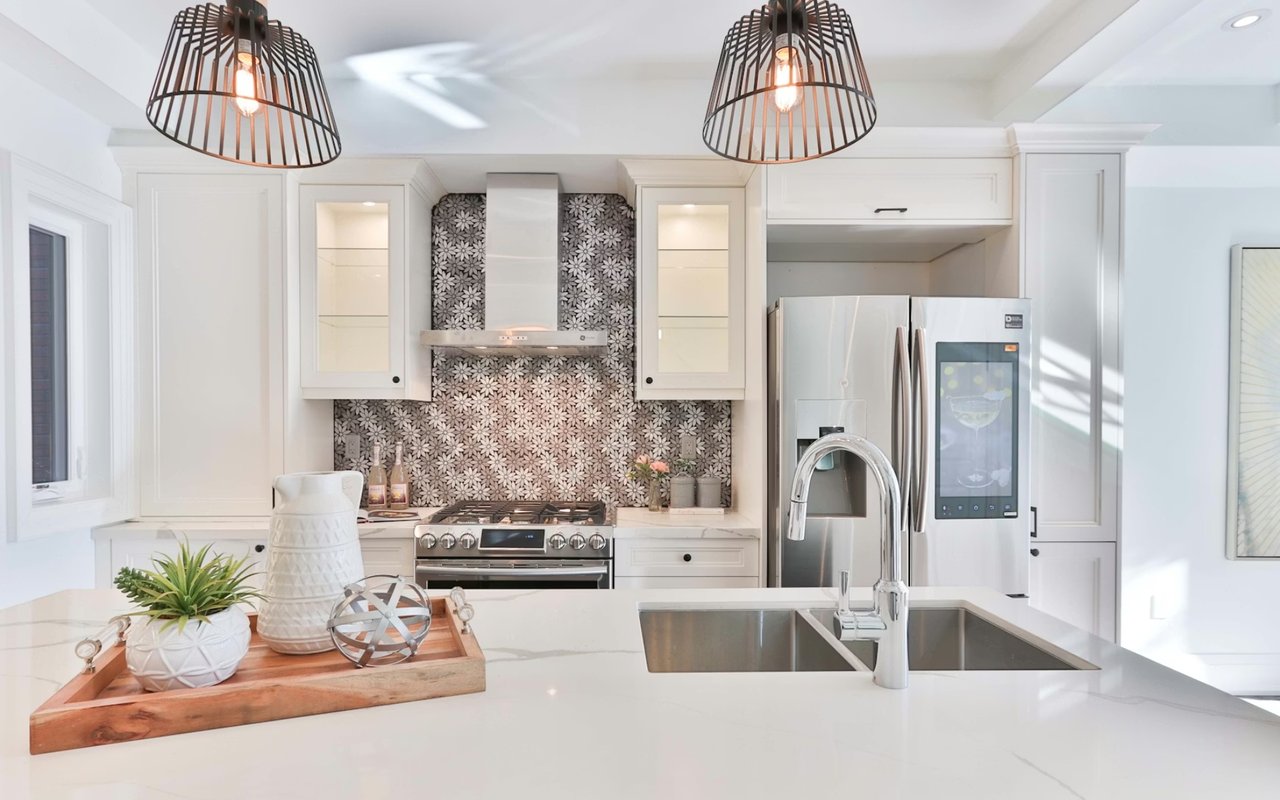
One of the most significant shifts in residential lighting in recent years is the elevation of fixtures from functional necessity to design statement. A sculptural pendant over a dining table, an oversized chandelier in an entry, or an artisan-crafted floor lamp in a reading corner doesn't just illuminate — it anchors the room's aesthetic and gives the eye somewhere to land.
In Charlottesville's mix of historic homes and newer construction, statement lighting is one of the most effective ways to introduce character and personality into a space. A period home with original architectural details can be made to feel even more special with a fixture that honors that history. A newer build can gain warmth and individuality with the right lighting choice. Either way, the fixture becomes a conversation point — and in listing photos, it becomes an immediate signal of quality and intention.
In Charlottesville's mix of historic homes and newer construction, statement lighting is one of the most effective ways to introduce character and personality into a space. A period home with original architectural details can be made to feel even more special with a fixture that honors that history. A newer build can gain warmth and individuality with the right lighting choice. Either way, the fixture becomes a conversation point — and in listing photos, it becomes an immediate signal of quality and intention.
What Makes a Statement Fixture Work
- Scale matters — a fixture that's too small for the room disappears; one that's appropriately sized commands presence without overwhelming.
- Material and finish should connect to at least one other element in the room — hardware, furniture legs, or architectural detail — for cohesion.
- Organic shapes, blown glass, natural stone, and handcrafted materials are particularly strong in current Charlottesville market preferences.
- Don't match everything — a single distinctive fixture reads as confident; a perfectly coordinated set of matching fixtures reads as generic.
How Lighting Affects Your Home's Perceived Value
For homeowners preparing to sell in the Charlottesville market, lighting deserves serious attention in the pre-listing process. Buyers form emotional impressions of a home within seconds of walking in, and lighting shapes that impression more than almost any other single variable. A home that's well-lit — warm, layered, and flattering to its best features — feels more valuable than the same home under poor lighting, regardless of what the comps say.
Professional listing photography amplifies this effect. Photographers can do a great deal with natural light and technique, but a home with thoughtful ambient and accent lighting gives them a stronger starting point. Replacing harsh overhead bulbs with warm alternatives, adding lamps to dark corners, and ensuring all fixtures are clean and functioning costs almost nothing relative to the impression it creates.
Professional listing photography amplifies this effect. Photographers can do a great deal with natural light and technique, but a home with thoughtful ambient and accent lighting gives them a stronger starting point. Replacing harsh overhead bulbs with warm alternatives, adding lamps to dark corners, and ensuring all fixtures are clean and functioning costs almost nothing relative to the impression it creates.
Frequently Asked Questions
What's the easiest lighting upgrade for the biggest impact?
Swap your bulbs. If you're currently using cool white or daylight bulbs (4000K and above) in your living areas, replacing them with warm white bulbs in the 2700K range is the single fastest way to change how your home feels. Pair that with dimmer switches on overhead lights, and the difference is immediate and significant.
Should I update my light fixtures before listing my Charlottesville home?
In most cases, yes — especially if the current fixtures are dated, builder-grade, or mismatched. Updated fixtures photograph well, signal that the home has been maintained, and create a stronger first impression. They don't need to be expensive. A well-chosen fixture in the $150–$400 range will consistently outperform the builder-grade fixture it replaces in terms of buyer perception.
How do I know if my home has enough lighting?
Walk through each room at different times of day and pay attention to where the space feels dim, flat, or uncomfortable. Dark corners, poorly lit task areas, and rooms that feel gloomy at night are all signs of insufficient or poorly layered lighting. Adding even one or two lamps to an underlit room can make a significant difference in how it feels and shows.
Contact the Denise Ramey Real Estate Team Today
We help Charlottesville homeowners make smart, targeted decisions — including which pre-listing improvements actually move the needle. Lighting is one of them, and we're happy to walk through your home and share exactly what we'd prioritize.
Reach out to us, the Denise Ramey Real Estate Team, to start the conversation. We're here to help you get the best possible result in the Charlottesville market.
Reach out to us, the Denise Ramey Real Estate Team, to start the conversation. We're here to help you get the best possible result in the Charlottesville market.